
Silicone Rubber – Casting Rubber for Mold Making
-

Condensation Silicone rubber
Why choose condensation silicone rubber? Condensation cure silicone, also known as tin cure silicone rubber or RTV silicone , is
-

Platinum-cure silicone
Why choose platinum-cure silicone? Platinum silicones are silicone rubbers that cure through an addition reaction with a platinum catalyst, hence
-

Silicone Oil - Dimethicone (Polydimethylsiloxane PDMS)
What is Dimethicone (Polydimethylsiloxane PDMS)? Dimethicone is the INCI designation for linear polydimethylsiloxane (PDMS) – a chemically inert, transparent liquid
-

HTV Silicones – LSR (liquid) and HCR (high consistency rubber)
What are HTV silicones?HTV silicones (High Temperature Vulcanizing) are silicone rubbers that only cure at high temperature, in a heated
-

Two-part silicone mold putty
Why choose kneadable RTV 2 silicone? Kneadable silicone, also known as silicone putty , is a two-component RTV2 system that
-

Waterproofing agent & impregnating agent – protect your facade
Why use a water-repellent agent? With the right stone impregnation product, you can waterproof your stone and make your facade
-

Silicone Dyes
What are silicone dyes? Our silicone colorants – also known as silicone pigment or silicone dye – have been developed
-

Fillers, Primers & Additives
Auxiliary products for silicone Auxiliary products for silicone, epoxy, PU, and composite. Choose lighter, stronger, or more processable options with
-

Primers for silicones
Primer for Silicone Rubber Most silicones often don't chemically bond to a surface. Therefore, a primer must be used to
-

Silicone Sealant
What is Silicone sealant ? Our single-component silicone adhesives are RTV-1 (room-temperature vulcanizing) systems that cure with humidity. They serve
-

Silicone foam
Durable Silicone Foam: The Ultimate Choice for Flexible Fills and Protection Silicone foam is known for its long-lasting durability and
-

RTV 2 Custom Silicones - Custom Silicone Formulation
Custom RTV 2 Silicone Formulation Looking for custom RTV 2 silicone ? We can customize and formulate RTV 2 silicone
-

Silicone emulsions - Sempure
What is a Silicone Emulsion (PDMS)? Professional, non-ionic silicone emulsion based on polydimethylsiloxane (PDMS) . Ideal as a water-based release
-
Professional Release Agents for Molds and Originals
🔧 Professional Release Agents for Molds and Originals Release agents facilitate the removal of a silicone mold from an original
-

Spatelbare Siliconen
Waarom kiezen voor spatelbare siliconen? Spatelbare siliconen zijn 2 componenten RTV 2 systemen met een dikke, standvaste consistentie. Je brengt
-

Raw Materials for Formulators - Silicone Raw Materials for Cosmetic and Technical Formulation
Raw materials for formulatorsDo you formulate yourself? Then you don't buy a ready-made product, but building blocks. On this page,


What is silicone rubber?
Casting rubber is a castable material that exhibits rubber-like properties after curing. This often refers to silicone rubber – also known as Liquid Silicone Rubber (LSR) or PDMS (polydimethylsiloxane).
Silicones retain their properties at both low and high temperatures, last longer than natural rubber, and are more resistant to chemicals.
At Silicones and More, you'll find a wide range of silicone casting rubbers for molds. These are categorized by chemistry into condensation-curing RTV silicone (tin cure) and addition-curing RTV silicone (platinum cure) .
Main applications of LSR/PDMS
- → Silicone mold making for polyurethane resin, epoxy resin, polyester, plaster, wax, concrete
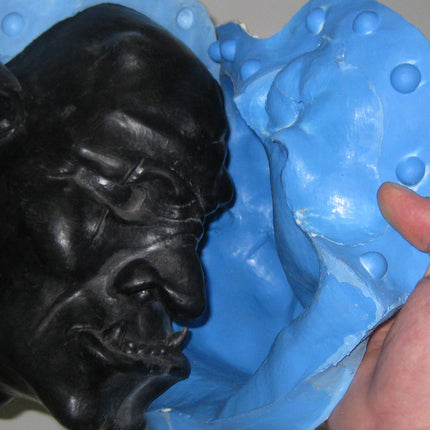
- → Bodycasting & lifecasting (skin contact; choose the right line)
- → Sculpture , art reproduction, SFX & prop making
- → Culinary molds (food-safe lines available)
- → Electronics potting , optical components & prototyping
Why choose our silicone rubber
- ✓ Professional quality with clear documentation and practical advice
- ✓ Stable performance over a wide temperature range; predictable curing
- ✓ Food-contact-compliant addition lines; skin safe only where the manufacturer declares it
- ✓ Wide hardness range : from very soft gels to hard qualities
- ✓ Excellent tear strength and chemical resistance
Addition vs. Condensation RTV Silicone
Condensation Silicone (Tin Cure)
Simple explanation: Tends to shrink slowly over time (≈1%/year). Not food-safe; generally cheaper and easier to process.
Good choice: for general molds without food contact.
- Form chains with by-products (condensate)
- Separate tin salts
- Moisture accelerates curing
- Bonding to fresh condensation silicone
Addition Silicone (Platinum Cure)
Simple explanation: Very low shrinkage after curing. Can be inactivated by sulfur, amines, nitrogen/metal salts, etc. → always perform a small test first.
More sustainable: in use; available in food/skin-safe lines.
- Polymerization without by-products
- Virtually no shrinkage
- Sensitive to pollution/inhibition
- Post-curing can improve properties
Resistance to chemical and contamination
After curing: Addition systems are generally more resistant to chemicals and aggressive resins than condensation systems.
During curing: Condensation systems tolerate contamination better; addition requires clean tools/masters.
Mixing ratios: Condensation is more tolerant; addition requires accurate weighing (deviations may block curing).
What is PDMS (Polydimethylsiloxane)?
PDMS is the base polymer of most silicone rubbers. In cosmetics, it's often called dimethicone. In molds, we usually refer to it as liquid silicone rubber (LSR) or RTV silicone.
Are you looking for silicone spray rubber for cars or RTV sealant? These are separate product lines/help categories.
Processing tips (RTV Silicone)
- • Masters clean & sealed; use a compatible release agent
- • Weigh accurately (especially when adding); mix thoroughly and scrape the sides and bottom of the cup
- • Vacuum bleed if possible; otherwise pour a thin, continuous stream from one corner
- • Build up brush-on forms in thin layers for even cure & strength
- • Monitor climate (T/RV) according to datasheet; allow to harden completely
Product overview
Condensation-curing silicone (RTV tin cure)
- Condensation 20 Starter Kit – complete kit; ideal for soap, candle or concrete molds
- Silicone Condensation 20 Universal – flexible, strong, white; good fluidity; Shore A 23–28
- Silicone Condensation 20 for PU & Epoxy – resistant to PU/epoxy; white; Shore A 23–26
- Silicone Condensation 20 for Polyester – resistant to polyester; white; Shore A 23–26
- Silicone Condensation DC 3481 R – strong; good against PU/polyester; beige; Shore A 18–21
- Silicone Condensation DC 3481 Fast – fast curing; beige; Shore A ~23
- Silicone Condensation HT 60 Set – Hard – very hard; up to 380 °C; red; Shore A 60
- Elastosil M 4514 – very good fluidity/self-venting; Shore A ~25; high tear strength; chemically resistant
- Wacker ELASTOSIL RT 480 + T40 – trowelable; high viscosity; for vertical casting & FIPG seals; Shore A 55
Addition-hardening silicone (RTV platinum cure)
- Silicone Addition Gel 840 Clear – potting gel for electronics; pot life ~80 min; cure ~24 h
- Silicone Addition Clear 0 Super Soft – crystal clear "firm gel"; ~50 min / ~3 hrs
- Silicone Addition Clear 0 Super Soft Fast – fast variant; ~30 min / ~2 hrs
- SkinClay SFX Silicone – SFX/wounds on the skin; 2–4 min pot life; 8–10 min cure
- Silicone Addition Clear 5 – very soft & clear; ~30 min / ~2 h
- Silicone Addition Colorless 5 – very soft/stretchy; for masks, props, candle molds; ~30 min / ~2 h
- Silicone Addition Pink 10 – soft/flexible; suitable for aggressive resins; ~40 min / ~4 h
- Silicone Addition Transparent 15 (Normal/Fast) – food-contact compliant in accordance with BfR XV and FDA 21 CFR 177.2600 (Wacker); Normal ~60 min / ~6 h; Fast ~2 min / ~15 min
- Silicone Culinary – food-safe; tested by TÜV Rheinland in accordance with § 31 LFGB (Pass); ~60 min / ~6 h
- Silicone Addition Clear 25 (Normal/Fast) – medium hard, clear; Normal ~120 min / ~20 h; Fast ~30 min / ~4 h
- Silicone Addition Transparent 25 Normal – medium hard & strong; ~60 min / ~6 hrs
- Silicone Addition Yellow 25 – good resistance to epoxy/PU/polyester; ~60 min / ~6 h
- Silicone Elastosil M 4601 A/B – medium hard; high temperature tolerance (short-term); ~90 min / ~12 h
- Silicone Addition Green 30 – relatively hard; for sturdy molds; ~60 min / ~6 h
- Silicone Addition Transparent 40 (Normal/Fast) – hard & strong; Normal ~60 min / ~6 h; Fast ~2 min / ~15 min
- Silicone Addition Colorless 50 – high hardness; shrinkage <0.1%; self-venting; ~30 min / ~3 h
- Plastique Culinary Fast – kneadable food-contact silicone; ready in ~10 min; pot life ~100 s
- PlatSil Gel-OO – ultra-soft (Shore OO30); certified skin safe by Polytek (FHSA, ASTM D4236, FDA requirements); for life casting, SFX prosthetics & theatre masks
- PlatSil Gel-10 – soft (Shore A10); certified skin safe by Polytek (FHSA, ASTM D4236, FDA requirements); ultra-realistic feel; for life casting & SFX prosthetics
- PlatSil Gel-25 – Shore A25; certified skin safe by Polytek (FHSA, ASTM D4236, FDA requirements); high tensile strength (434 psi); for industrial molds, prototyping & SFX
- PlatSil Gel-0020 – ultra-soft (Shore OO20); certified skin safe by Polytek (FHSA, ASTM D4236, FDA requirements); for prosthetics, SFX & life casting
- PlatSil Gel-0030 – ultra-soft (Shore OO30); certified skin safe by Polytek (FHSA, ASTM D4236, FDA requirements); for prosthetics, SFX & life casting
- PlatSil FS-00 – ultra-soft (Shore OO52/A5); fast (30 min demold); high elongation (1,300%); for robotics, soft prototypes & SFX
- PlatSil FS-10 – Shore OO60/A13; fast (25 min demold); low viscosity (4,200 cP); for rapid prototyping & PU casting
- PlatSil FS-20 – Shore A20; ultra-low viscosity (3,000 cP); versatile mid-range in the FS series, suitable for a wide range of applications with short turnaround times
- PlatSil HTS-25 – Shore A25; extreme elongation (>2,000%); high tear strength (179 pli); for PU, epoxy & polyester casting
- PlatSil HTS-40 – Shore A40; high tear strength (131 pli); excellent chemical resistance; for PU, epoxy & polyester casting
- QM 270 – Shore A62; high tear strength (17.4 N/mm); fast demold (8–12 h); dimensional stability <0.1% shrinkage; for architecture & furniture industry
- SilSo Lite 21030 – self-blowing silicone foam (platinum cure); for potting EV battery modules, electronics & lightweight encapsulation
Additives & Auxiliaries
- PlatThix Liquid Thickener – thickener for PlatSil 71/73; increases viscosity for brush-on molds & vertical applications
- PlatSil 71/73 Part R Retarder – retarder for PlatSil 71/73; extends pot life and demold time
- PlatSil 71/73 Part X Accelerator – accelerator for PlatSil 71/73; shortens pot life and demold time
Getting started
Order liquid silicone rubber (LSR/PDMS) and silicone rubber mold sets. Compare addition and condensation properties, download datasheets, and contact our team for friendly expert advice!