
Professional Silicone for Making Ornaments and Statues Discover the art of copying, restoring, and creating ornaments with our specialized silicone and casting materials. Whether you want to restore historical ornaments, duplicate decorative elements, or create entirely new sculptures, our materials offer the precision and durability you need. 🏛️ Best Silicone...
ornaments (48)




Professional Silicone for Making Ornaments and Statues
Discover the art of copying, restoring, and creating ornaments with our specialized silicone and casting materials. Whether you want to restore historical ornaments, duplicate decorative elements, or create entirely new sculptures, our materials offer the precision and durability you need.
🏛️ Best Silicone for Ornament Reproduction
- Silicone Addition Pink 10 - Soft, flexible silicone ideal for delicate ornament details
- Silicone Addition Yellow 25 - Medium-hard silicone for versatile applications
- Silicone Addition Green 30 - Hard silicone for durable molds with repeated use
- Silicone Condensation 20 Universal - Cost-effective solution for general ornamental work
- Silicone Condensation DC 3481 R & Fast - Professional silicone for complex projects
🎨 Why Additive Silicone for Porous Ornaments?
For porous or sensitive original models we recommend addition silicone because it:
- ✓ Does not release oils - Protects porous materials from stains
- ✓ Minimal shrinkage - Maintain exact dimensions of historical details
- ✓ Excellent detail reproduction - Capture even the finest ornamental details
- ✓ Chemical inertness - No reaction with sensitive materials
- ✓ Long lifespan - Durable molds for multiple castings
🔧 Professional Casting Materials
- Porcelain Plaster - Traditional material for fine ornamental details
- A1 Acrylic Resin - Strong, machinable castings for modern applications
- Plaster cast - For support caps and reinforcements
- A1 Triaxial Fiberglass Cloth - Reinforcement for large or loaded ornaments
🏗️ Spatula Technique for Fixed Ornaments
When ornaments cannot be removed from the wall or ceiling :
- ✓ Silicone spatulas - Apply directly to the original
- ✓ Make a support cap - With epoxy or fiberglass for support
- ✓ Perfect replicas - Without damaging the original
- ✓ In-situ restoration - On-site repairs possible
🛡️ Protection of Porous Materials
Polyvinyl Alcohol (PVA) as a protective layer:
- Seals porous surfaces
- Prevents silicone penetration
- Easy to remove after use
- Suitable for plaster, stone, wood and concrete
- Important: Always test on an inconspicuous area first!
🎯 Thickeners for Spatula Technique
- Thixo - Traditional thickener for silicone
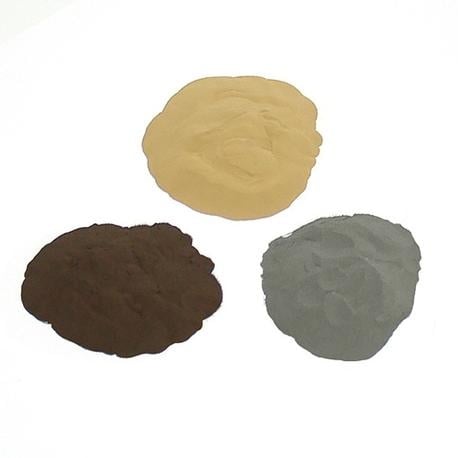
- Fused Silica Powder - Modern thickener with excellent properties
- Both make silicone suitable for vertical application
- Retains all the properties of the base silicone
🏛️ Areas of application
- Historical Restoration: Churches, monuments, historic buildings
- Architectural Elements: Cornices, columns, capitals
- Decorative Ornaments: Ceiling Roses, Wall Decorations
- Sculpture: Replicas of works of art and sculptures
- Theater & Film: Props and set pieces
- Interior design: Unique decorative elements
🔬 Material Selection Guide
- Porous original models: Always add silicone + PVA protection
- Non-porous models: Condensation silicone for cost-effectiveness
- Fine details: Soft silicone (Shore A 10-25)
- Large ornaments: Harder silicone (Shore A 30+) for stability
- Repeated use: Professional DC 3481 series
💡 Professional Tips
- Release agents: Use Achem 3007S or SG-1008S spray
- Support Caps: Epoxy support cap set or fiberglass for large molds
- Temperature: Work at stable room temperature (18-22°C)
- Preparation: Clean master model thoroughly for best results
- Planning: Think ahead about demolding and mold separation
OrnamentsYou can make ornaments yourself, repair them or even duplicate them so that they can be used elsewhere. If you make the ornament yourself, you can sculpt, mill, or cut it out. Then, make a silicone mold from this original model. Simply pour plaster, cement, concrete, or acrylic resin into the silicone mold. If you want to repair or copy an ornament that can't be removed from the ceiling or wall, silicone isn't poured but spatulated onto the original model. A support cap is then placed against it. This creates a mold into which you can then cast a perfect replica. This copy can then be restored or hung directly. For original models that may be very porous or sensitive to oil absorption, we recommend using additive silicone. If that's not important, you can also use the cheaper condensation silicone. Porous models are best sealed with polyvinyl alcohol (PVA). Note: always test whether this works for your ornament! Silicone is thickened with thixo or fused silica powder. Support caps are easiest to make with the epoxy support cap set, acrylic resin, or porcelain plaster and fiberglass mats. Need help? Contact us at info@siliconesandmore.com If you have any questions, please don't hesitate to contact us. We're happy to help! Of course, you can also look at our manuals or online at YouTube for fun ideas! |
|


